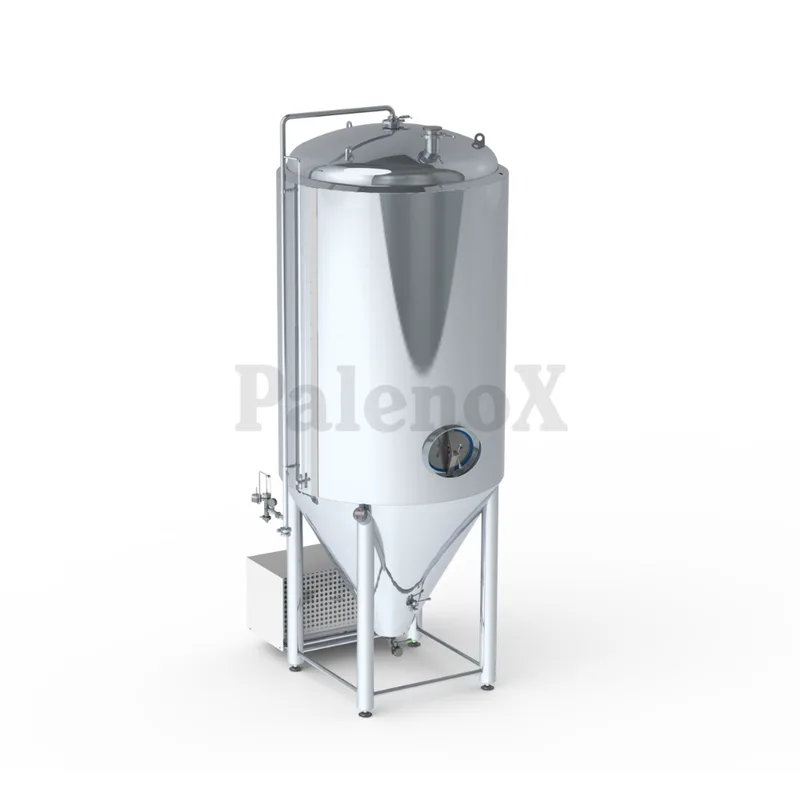
What to consider before buying a fermentation/maturation tank
Published on September 9, 2022
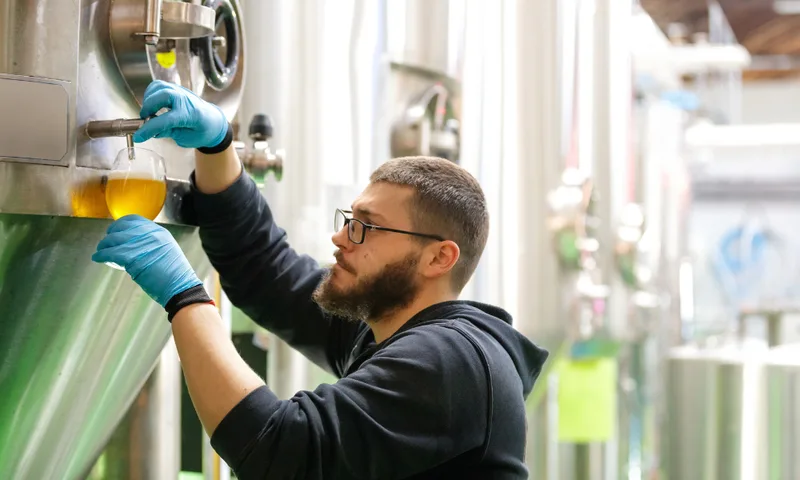
FERMENTATION/MATURATION TANKS
WHAT TO WATCH OUT FOR WHEN BUYING THIS EQUIPMENT
For many people, fermentation/maturation tanks are all the same and only the price is taken into account. We come across this statement many times, but it is not true, and the purchase should not be made using price as the only deciding factor.
Let us explain why you should be extra careful when buying this equipment by asking a few questions:
- Did you know that a fermentation/maturation tank is a pressure vessel?
- That to know whether a fermenter is right for your process you must consider the working pressure you are going to use?
- That if the working pressure is higher than the design pressure, the tank can suffer serious structural damage or even explode?
- Hard to believe, isn't it? But this kind of incident is not that unusual.
Below is some information that you and the manufacturer must guarantee when you invest in fermentation/maturation tanks:
- State the real working pressure you will use, and state it correctly. This information directly affects the price of the equipment. It is used to produce a calculation report in which the required plate thickness is sized, and the stated working pressure must be respected.
- The equipment must have a safety valve, in addition to the process control valve (combination valve) with a pressure gauge showing the working pressure in the pressure vessel.
Another important point: after the serious incident at a microbrewery in Minas Gerais, MAPA (Brazil's Ministry of Agriculture, Livestock and Supply) became stricter about the documentation required for the cooling system, heat exchanger and fermentation/maturation tanks. If you have not been notified yet, wait — a notice will soon arrive requesting drawings of this equipment, the manufacturer and a detailed description of how your production process works.
Have you thought about the breweries that bought equipment based on price alone? From manufacturers without technical knowledge of the process? From manufacturers that no longer even exist? The saying "buy cheap, buy twice" has never fit so well, has it?
Whichever manufacturer you are negotiating with right now, don't be fooled: ask what working pressure was used to size the fermenter. And if possible, check the thickness of the body and cone plates when the equipment arrives — there are affordable ultrasonic measuring instruments for that.
Check whether a hydrostatic test of the tank body and cooling jacket was carried out and documented in a report. It is also important to check whether the tank has an identification plate showing the serial number, date of manufacture and working conditions (test pressure, working pressure, operating temperature range).
Now let's talk about other details that are not about safety, but are also important because they directly affect production:
- Internal finish – the type of finish directly affects the quality of cleaning and disinfection, and how the yeast compacts in the cone.
- The cone angle and the geometry used to size the equipment contribute to fermentation quality, temperature uniformity and yeast settling, as technically proven.
- Empty space (headspace) – fermentation can produce a large volume of foam, and if the empty space in the tank is not enough, the foam will overflow, resulting in beer loss and contamination of the cleaning system (piping, spray ball).
- Accessories supplied with the equipment and accessories sold as options: always ask, so there are no surprises when the equipment arrives.
Weighing everything each manufacturer is offering is an important task, because sometimes you will be surprised at how much you are paying for what you get.
You should also assess the manufacturer's technical knowledge: whether they design the equipment with your production process in mind, so that the return on your investment is assured. It is important to ask for references from people who already use the equipment.
And a tip to make sure the equipment stays compliant: carry out a visual inspection periodically, and if you notice any anomaly, inform the manufacturer so a more thorough inspection can be done. Remember that the safety valve must never be altered — it is what prevents the internal pressure of the tank from exceeding the design pressure. If you have ever tampered with this device, contact the manufacturer to replace it.
We hope this material has helped you in your selection process and leads to great business.
Authors:
Juliana Bianchi – Business Analyst at Palenox Indústria de Equipamentos Alimentícios LTDA
Matthias R. Reinold – Certified Brewmaster (V.L.B – T.U. Berlin)