Efficiency is not in one piece of equipment. It is in the integration of every step of the process
Published on July 29, 2026

When a brewery wants to increase its yield, cut costs or improve beer quality, a common question comes up:
"Which piece of equipment should I replace?"
In practice, that is not the most important question.
The real efficiency gain does not happen when just one piece of equipment is better. It happens when every step of the process works in perfect harmony.
From milling to boiling: each step prepares the next
An efficient brewery is built on integrated processes. Beer quality depends on the connection between milling, mashing, lautering and boiling.
1. It all starts with milling
The foundation of brewhouse efficiency.
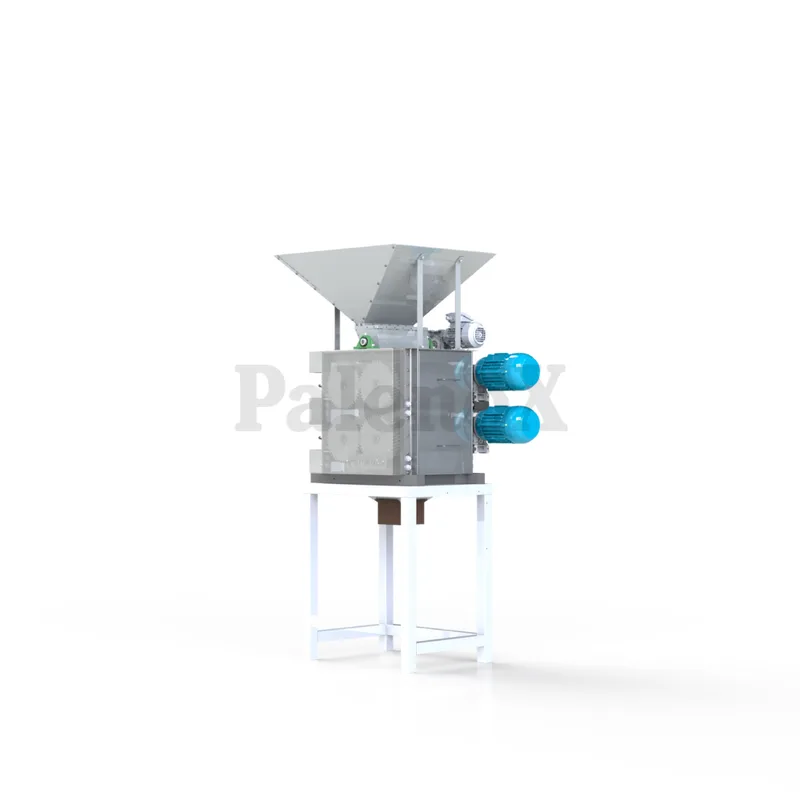
Milling is one of the most important steps in production.
Efficient milling exposes the malt endosperm to make sugar conversion easier, while preserving the husks, which are essential for lautering.
When milling is inadequate:
❌ Overly fragmented husks make filtration harder.
❌ Under-exposed endosperm reduces extraction efficiency.
Result: lower yield from the very start of the process.
Good beer starts with good milling.
2. Mashing: preserving what milling delivered
After milling, mashing begins.
This is when starches are converted into fermentable sugars through the action of enzymes.
For this to happen with maximum efficiency, two things are essential:
✔️ Uniform heating
✔️ Homogeneous mixing
Palenox technology
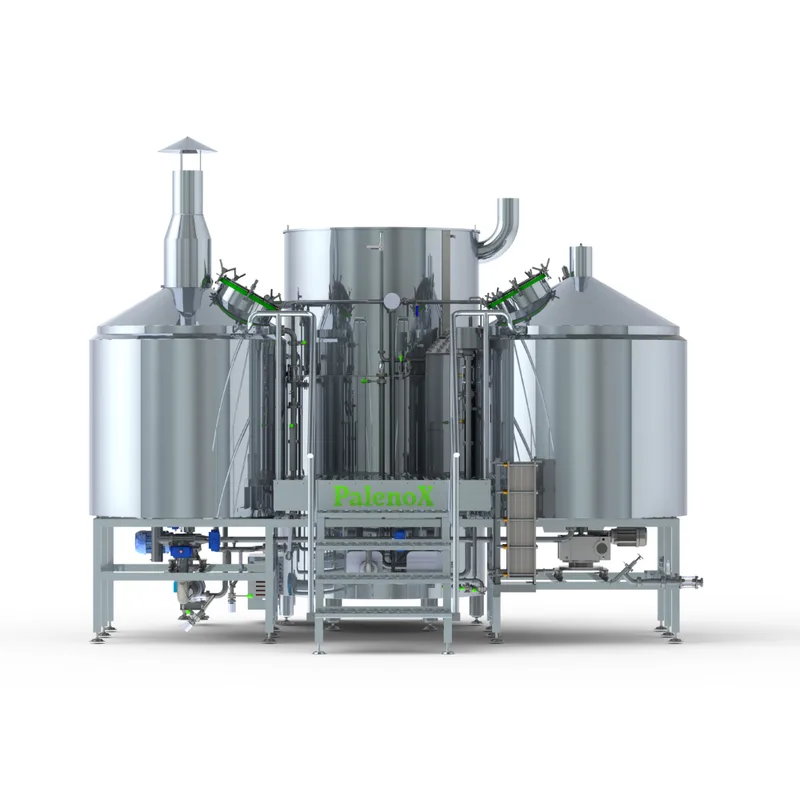
In the Palenox brewhouse, the External Heater Heating System (patented) provides:
- Efficient heat transfer;
- Fewer hot spots;
- Preservation of enzyme activity.
In addition, the agitation system keeps temperature and concentration uniform throughout the mash.
Benefits
- Higher conversion efficiency;
- Greater repeatability between batches;
- Lower energy consumption.
3. Lautering: where milling and engineering work together
After mashing, the wort goes to the lauter tun.
Here, milling and the false bottom need to work together.
In the Palenox brewhouse we use a false bottom with a Johnson screen, designed to provide:
✔️ Uniform flow;
✔️ Excellent retention of solid particles.
When the filter bed forms correctly:
- husk carry-over is reduced;
- tannin extraction decreases;
- the formation of unwanted phenolic compounds is avoided.
Result: greater fidelity to the beer's sensory profile.
4. Boiling: efficiency does not mean more heat
There is a very common misconception.
Many believe that an efficient boil means applying as much heat as possible.
In reality, a good boil delivers:
✔️ A high evaporation rate;
✔️ Uniform energy distribution.
When there are hot spots, the following can occur:
- localized caramelization;
- wort darkening;
- changes to the style originally designed by the brewmaster.
Palenox technology
The External Heater Heating System provides an intense, uniform and efficient boil, reducing the risk of localized overheating.
5. Handling the steam also makes a difference
During the boil, volatile compounds such as DMS, responsible for unwanted aromas and flavors, are driven off.
If the steam condenses and drips back into the kettle, these compounds return to the wort and can cause off-flavors.
That is why an efficient design also includes proper steam extraction.
Thinking in terms of process brings results
An efficient brewery does not depend on a good brewhouse alone.
It depends on the integration of every step of the process.
When milling, mashing, lautering and boiling work together, the gains show up as:
Benefits
✅ Higher malt yield
✅ Lower energy consumption
✅ Greater consistency between batches
✅ Lower cost per liter produced
✅ Beers truer to the recipe
What sets Palenox apart
At Palenox we develop solutions with the complete integration of the brewing process in mind.
✔️ Greater energy efficiency
✔️ Enzyme preservation
✔️ Efficient lautering with a Johnson screen false bottom
✔️ Uniform boil without localized overheating
✔️ Lower risk of off-flavors
Because a great beer is not born from a single piece of equipment.
It is born from an intelligent process.
Conclusion
Efficiency is not in one piece of equipment. It is in the integration of every step of the process.
Perfect milling loses efficiency if the mash does not preserve the enzymes.
A good mash loses yield if lautering does not make full use of the malt's potential.
And a poorly designed boil can compromise all the quality built in the previous steps.
In brewing, each process prepares the next.
That is why Palenox develops integrated solutions so that each step enhances the next.
📩 Want to increase your brewery's efficiency?
Our team can help you identify opportunities to increase yield, cut costs and raise production quality.
Contact Palenox and discover how intelligent process engineering can transform your brewery's results