The importance of malt in brewing
Published on August 3, 2023
The importance of malt in brewing
Matthias R. Reinold
Malts have a decisive influence on the character of beer. The right combination of malts chosen for brewing will determine the beer's final color, flavor, mouthfeel, body and aroma.
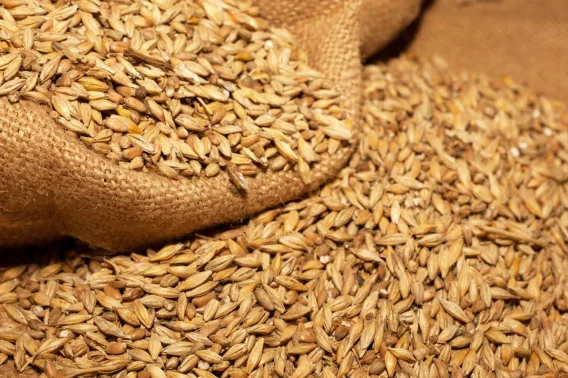
Malt determines the character of the beer
The basis for a beer's color and flavor is set in the malt house, not in the brewery. Brewers determine the character of their finished beer by carefully selecting the brewing malt. But how this malt is produced and what its characteristics are is mainly the maltster's responsibility. The maltster chooses the cereals suitable for brewing malt — that is, barley and wheat — and sometimes also spelt (Triticum spelta) or rye. The grains are cleaned and sorted mechanically. Then they go into "steeping", where the cereal is alternately put in contact with water and air for up to three days, and then germinated for about five days in a germination box. During this process, various proteolytic and amylolytic bonds are broken down. With proper aeration, this produces green malt, which must then be kilned or roasted. By choosing the kilning temperature, the maltster decides the color and flavor of the malt — and thus sets the color of the finished beer. Malt for pale beer is kilned at 80°C, and malt for dark beer at around 100°C. Everything in the malt house is a natural process, without chemicals, in which the maltster controls the process only through optimal control of moisture, temperature and aeration. The finished malt has its rootlets removed, is de-dusted and polished, and is finally stored in silos. From there, the finished malt is shipped to breweries, which use it in brewing. In bottom-fermented beers, we can only use barley malt. For top-fermented beers, we can use other types of malt, such as wheat or rye malt.
Barley malts
Malt influences the flavor of beer more than any other ingredient. The types of malt chosen for brewing will determine the final color, flavor, mouthfeel, body and aroma. Depending on the desired beer style and the type of malt, an average of 15 to 17 kg of malt, or even more, is used to produce one hectoliter of beer.
Base malts
Base malts provide most of the enzymatic (diastatic) power to convert starch into fermentable sugars and offer the highest extract potential. There is no universal system for classifying malts, since maltsters categorize and sell their products differently. Most of the time, however, malts are classified as base malts or specialty malts. Base malts usually make up a large percentage of the total grain bill, while specialty malts make up a much smaller share. The only exception is wheat malt, which can make up to 100% of the raw material in wheat beer production.
Specialty malts
Specialty malts are designed to give beer unique characteristics, such as color, flavor, medium-molecular-weight proteins to improve foam stability, body, or other traits that enhance how the consumer perceives the beer. Unlike base malts, specialty malts provide little or no enzymatic (diastatic) power, but they do contain some extractable material. Specialty malts are used in relatively small amounts compared with base malts. Depending on the beer style, the brewer may use one or two types of malt, or as many as seven or eight different specialty malts.
Caramel (Crystal) malts
Continental European brewers of lager beers have traditionally used caramel malts, whereas brewers of English-style ales favor crystal malts. Today most maltsters no longer distinguish between caramel and crystal malts and more often use the term "caramel malt" for both. Other names used for caramel malts include CaraMunich, CaraVienna, Special B, Carastan, Cara and Extra Special.
Roasted malts
Dry-roasted malts are made by kilning at very high temperatures followed by roasting. The heat and the length of the roast determine the color and flavor of the malt. Roasted malts include amber malt, brown malt, black malt, chocolate malt and dark malt. Unmalted barley: two other specialty products are made from unmalted barley — roasted barley and black barley. Neither of these products has active enzymes.
Other malted grains
Wheat malt
Wheat malt, for obvious reasons, is essential in making wheat beers, making up to 100% of the raw material, including German Weissbier and Weizenbier (wheat beer). Wheat is also used in beers based on barley malt (3-10%), because its proteins give the beer a fuller feel and greater foam stability. Other benefits are better beer clarification and a fuller palate. On the other hand, wheat malt has considerably more protein than barley malt, usually 13 to 18%, consisting mainly of glutens, which can make the beer hazy. Compared with barley malt, it has a slightly higher extract, especially if it is milled a little finer than barley malt. European wheat malts usually have fewer enzymes than American malts, probably because of the malting techniques or the wheat varieties used.
Rye malt
Rye malt, like wheat malt, has no husk. It yields less extract than the malts mentioned above and is slightly darker than barley or wheat malt. Rye malt has a very pronounced flavor and can be overpowering if used in large amounts. Additions of rye malt below 5% give the beer a pleasant taste. Rye malt can give the beer a reddish color. To brew beers that meet the style characteristics (extract, alcohol content, color, bitterness, aroma and flavor), you need to choose the right raw materials (in this case, the malt). We don't necessarily need countless types of malt to achieve what we want. Most of the time a base malt (Pilsner) and one or two specialty malts are enough to reach the desired color, aroma and flavor.
Matthias R. Reinold, Brewmaster – Dipl. Braumeister (V.L.B – T.U. Berlin) matthias@cervesia.com.br www.cervesia.com.br
Palenox Palenox Equipamentos Alimentícios LTDA
@palenoxbrasil www.palenox.com.br WhatsApp +55 54 98149-0338