Dynamic Dry Hopping: Technological Advances, Sensory Quality and Economic Benefits for the Brewing Industry
Published on September 5, 2025
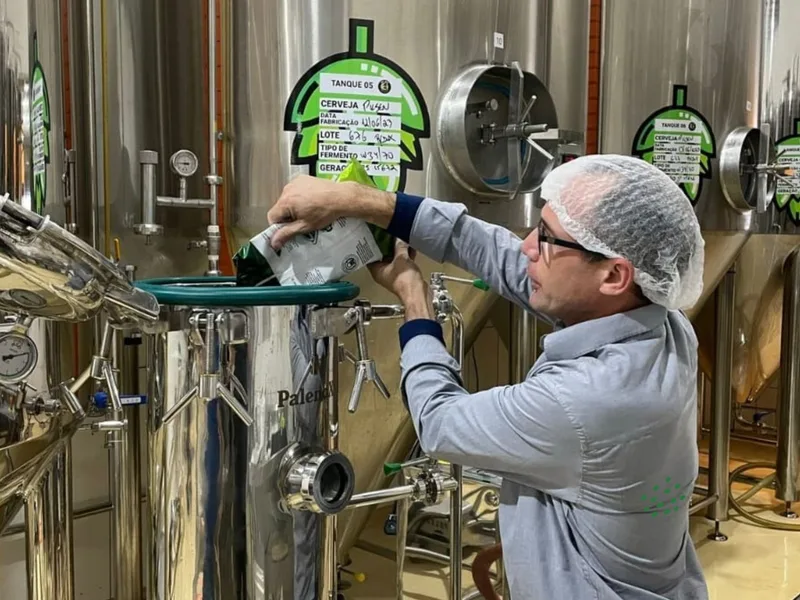
Dry hopping is a technique widely used in craft and industrial brewing to intensify aromas from hop essential oils. However, traditional methods have limitations such as low extraction efficiency, product losses from purges and high hop consumption. Dynamic dry hopping has emerged as a technological evolution that, through controlled recirculation of wort or beer over the hops, maximizes the extraction of aroma compounds and significantly reduces losses. This article reviews the theoretical background of the process, presents its impact on the sensory quality of beer and analyzes the economic advantages for the brewery.
- Introduction
The use of hops (Humulus lupulus L.) in brewing is not limited to bitterness. In recent years there has been growing interest in techniques that highlight the aromatic and sensory character this ingredient provides (Steenackers et al., 2015). Dry hopping, the technique of adding hops after fermentation, is common practice in styles such as American IPA, NEIPA and Double IPA.
However, the conventional method, based only on the static immersion of hop pellets or cones, has technical limitations that directly affect yield and process standardization (Shellhammer, 2016). In this context, dynamic dry hopping, also called hop recirculation, has become established as an innovative alternative.
- Theoretical Background 2.1 Conventional Dry Hopping
Static dry hopping is characterized by adding hops to the fermentation or maturation tank, where the essential oils diffuse passively (Muller et al., 2017). Although it is an established practice, its efficiency is limited by factors such as:
Low solubility of hydrophobic compounds;
Formation of saturation points;
Agglomeration of pellets;
Volume losses from liquid retained in the hop trub.
2.2 Dynamic Dry Hopping
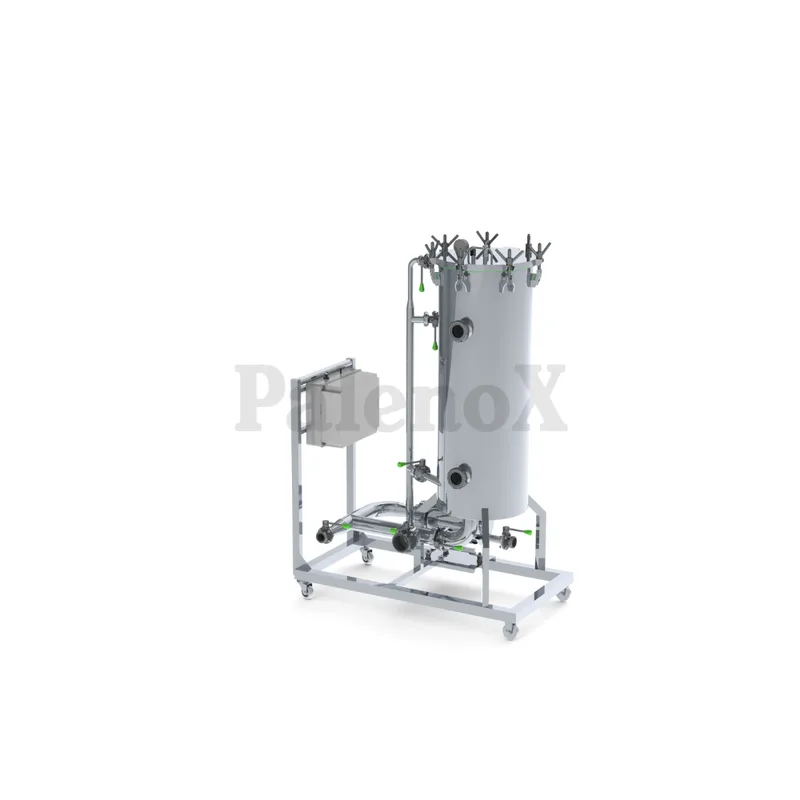
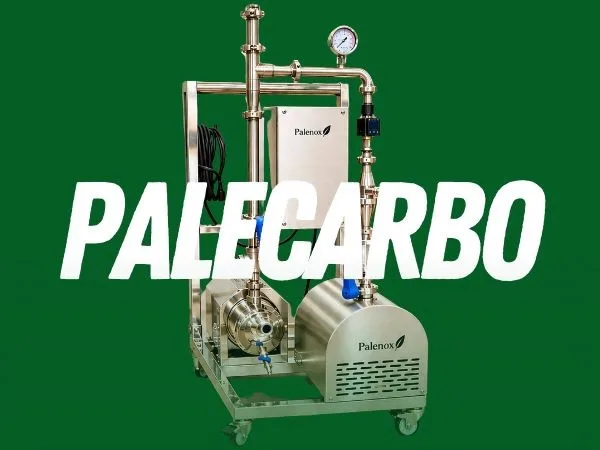
Dynamic dry hopping consists of actively recirculating the beer in contact with the hops, using closed systems, sanitary pumps and retention filters. This controlled movement increases the contact surface, favors the extraction of volatile compounds and reduces the need for large amounts of hops (Oliveira et al., 2021).
The main technical parameters of the process include:
Recirculation rate (controlled to avoid oxidation);
Contact time (usually shorter than in the static method);
Application temperature (0–10 °C, to avoid excessive volatilization);
Final filtration (efficient retention of plant particles).
- Benefits for Beer Quality
Dynamic dry hopping offers relevant sensory advantages:
Greater extraction of terpenes and monoterpenes (myrcene, linalool, geraniol), responsible for fruity and floral notes;
More stable aroma intensity over time, thanks to better homogenization of the product;
Fewer off-flavors related to oxidation and excessive vegetal compounds;
Body and drinkability preserved, since less plant matter is carried over.
Studies show that dynamic dry hopping increases the extraction efficiency of essential oils by up to 30% compared with the static process (Pires & Brányik, 2015).
- Economic Impact for the Brewery
Besides sensory quality, dynamic dry hopping brings significant financial gains to production:
Lower hop consumption: thanks to more efficient extraction, the same sensory profile can be reached with up to 20–30% less input.
Fewer purge losses: in static processes, large volumes of beer are trapped in the hop sludge; dynamic recirculation minimizes this.
Batch standardization: less variation between batches reduces rework and discarding of off-spec product.
Optimized maturation time: the process is faster, freeing tanks for new production cycles.
These factors increase the brewery's profit margin, especially in styles that require high hop doses.
- Final Considerations
Dynamic dry hopping is a technological advance that combines innovation, efficiency and sustainability. By making better use of hops, it delivers beers with a more intense, clean and stable aroma profile, while reducing operating costs and production losses.
With the growth of the hoppy beer market, this technique is a strategic tool for breweries seeking superior sensory quality and economic optimization.
References
Muller, C., et al. (2017). Hop-derived aroma compounds and beer flavor. Journal of the Institute of Brewing, 123(2), 182–194.
Oliveira, R. S., et al. (2021). Technological innovations in dry hopping: Effects on beer aroma and production efficiency. Brewing Science, 74(4), 102–110.
Pires, E. J., & Brányik, T. (2015). Biotechnology of Beer. Elsevier.
Shellhammer, T. H. (2016). Beer Hopping Techniques and Their Impact on Sensory Quality. MBAA Technical Quarterly, 53(1), 13–19.
Steenackers, B., et al. (2015). Hop essential oils: From brewing to health. Natural Product Communications, 10(8), 1325–1334.