Cleaning draft beer installations
Published on February 8, 2023
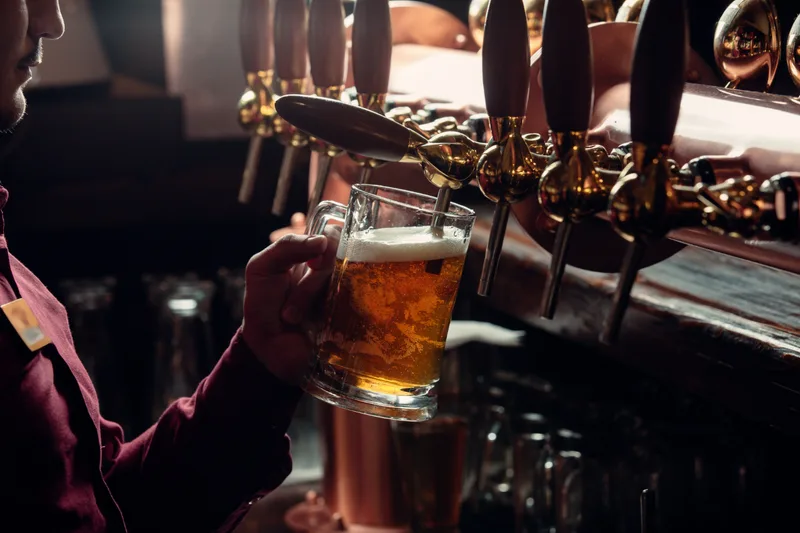
Beverage dispensers, such as draft beer systems, are used to serve beer from kegs into drinking vessels (glasses). Beer is microbiologically sound in the kegs as originally packed and can be stored safely within the specified period of use. But once the keg is opened by connecting it to the dispensing line, it may stay connected for anything from a few hours to a few days. Since an open system lacks the airtight barrier to the outside world, contaminants can get into the system and alter the beer.
The purpose of sanitation is to minimize the entry of contaminants and keep them at a low level. This way any change in the beer can be prevented, protecting human health and keeping the beverage at its best quality.
Food legislation
Legislation therefore subjects beverage dispensing systems to special cleaning requirements, so that risks or harm to people can be ruled out. Under this legislation, the user (operator) of the installation is given the requirements he or she must meet regarding the hygiene of draft beer dispensing systems.
What contaminates a draft beer dispensing system?
Microorganisms can be desirable in certain beverages (for example, yeast in naturally cloudy beers). In many cases, however, they are undesirable because they spoil the beer.
Beers are delivered by the supplier practically free of foreign microorganisms, that is, with a count of less than one microorganism (CFU = colony-forming unit) per liter. When the keg is connected and the coupler is opened, microorganisms enter the system. This cannot be avoided even with today's state-of-the-art technology.
Microorganisms multiply, forming deposits on the surfaces of the lines in direct contact with the product, and produce metabolic products. These can change the taste of the product or make it cloudy. The best-known metabolite is lactic acid, produced by lactic acid bacteria. This leads to acidification of the beverage. Other species of microorganisms, in turn, produce other metabolites.
The so-called beer biofilm is caused by acetic acid bacteria. The smell of vinegar on poorly maintained beer taps is a typical sign of these organisms. Finally, we can mention molds, which can only exist where they find atmospheric oxygen and nutrients. In draft beer dispensing systems, the supply is usually abundant. It starts with beer splashes during dispensing and goes all the way to taps dripping onto the counter. Mold is always a sign of poor cleaning.
Other soiling
Besides microorganisms, we find other soiling. We often find deposits of hop components in beer lines. They give the lines a golden-yellow color and, like microorganisms, cannot be removed by rinsing with water alone. It is important to note that these deposits can change the taste of the beer. Detergents and disinfectants can also remain as residues in draft beer systems. This indicates improper handling and insufficient rinsing of lines and hoses.
Cleaning processes for lines and hoses in the brewery
Cleaning means removing all kinds of soil, and that also includes microorganisms. The cleaning process used must ensure that the required cleaning performance is achieved. The various cleaning methods are described below:
Cleaning with water: Lines and hoses are only flushed with drinking water. This achieves a limited cleaning effect, so this form of cleaning is important but not effective enough.
Cleaning with mechanical aids: These methods aim to remove deposits, but they cannot eliminate microorganisms. An example of a mechanical aid is a sponge ball pushed through the line/hose.
Chemical cleaning: Chemical cleaning usually uses combined detergents and disinfectants. The advantage of these chemical cleaning agents lies, in particular, in their germicidal effect and their ability to dissolve soil and penetrate every soiled area. In chemical cleaning, a few factors must work together to achieve a good result: temperature, detergent concentration and exposure time. It is therefore necessary to strictly follow the manufacturer's recommendations for their use.
Chemical-mechanical cleaning: In chemical-mechanical cleaning, a cleaning agent is combined with a mechanical aid. This form of cleaning uses the advantages of both types.
Cleaning in practice
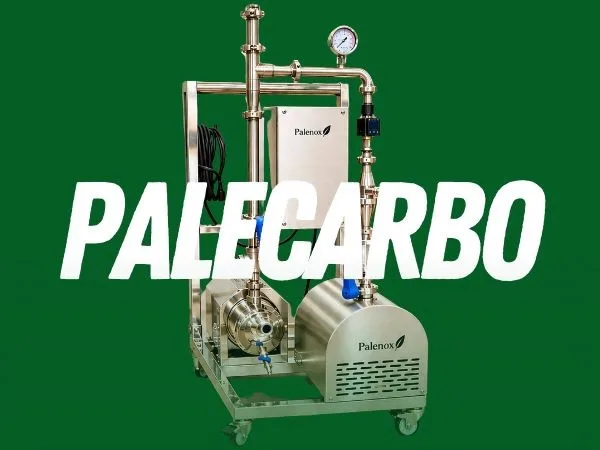
Draft beer systems are cleaned with mobile cleaning devices (usually a wheeled frame with an electrical panel, solution tank, centrifugal pump and hoses with fittings) or with fixed installations.
Basic cleaning: Basic cleaning should be chemical-mechanical cleaning. It must be carried out after commissioning (start-up) of the system, after longer interruptions in operation and when the dispensing system is heavily soiled. It should be kept up at regular intervals and repeated at least monthly.
Regular cleaning: To be carried out as needed, but at least at monthly intervals (it depends on the beer style, whether filtered or not, the type of installation and the conditions of use).
Cleaning the dispensing tap
By law, taps must be cleaned daily, ideally before and after service. Practical experience shows that a tap that is washed daily and treated with a disinfectant contributes significantly to the overall hygiene of the system. At least once a month, all taps should be thoroughly cleaned.
Cleaning the keg coupler
Likewise, although not as often as at the tap, the beer comes into contact with air at the keg coupler. Cleaning is therefore necessary every time the keg is changed. The minimum requirement is rinsing with water. If necessary, regular rinsing followed by disinfection can be carried out. Good line cleaning is useless if the coupler remains contaminated, because the infections there can spread quickly.
Tips
To keep microbial growth low during breaks, an unbroken cold chain must be ensured. This means that, from the cold room where the kegs are stored to the dispensing tap, an insulated line (python) with accompanying cooling should be used. Taps should be cleaned daily, and the line connection (keg coupler) should be regularly dismantled and cleaned. To clean a commercial draft beer dispensing system, a professional qualified in these systems should be hired.
The user (operator) of the dispensing system must specify the exact nature and extent of the cleaning work to be done. In case of improper cleaning, the user (operator) can take action against the professional and the company hired to clean the installation and equipment, but the operator remains responsible for the cleanliness of the system. If the user (operator) wants to clean his or her own draft beer system, many cleaning systems are available on the market. Detailed technical information on how to proceed should be sought from a specialist at the supplier.
Authors:
Matthias R. Reinold – Certified Brewmaster (V.L.B – T.U. Berlin)